
Good living room decor starts with the way you live, not with a pile of accessories. Whether your room is compact, open-plan, or shared by the whole household, a few deliberate choices can make it feel more comfortable and cohesive. Use these living room decor ideas as a practical sequence: plan the layout, choose a visual anchor, add useful light and texture, then finish with a small number of personal accents. Browse more inspiration in Home Decor.
Begin with the room’s real routine

Before moving furniture or choosing colors, list what happens in the room: conversation, reading, television, play, working, or some mix of these. Identify the clearest walking routes and keep them open. Arrange seating so people can talk without shouting across the room, and make sure frequently used items have a convenient place to land. In a small room, leave some floor and tabletop space visible; in a larger room, define separate zones with seating orientation and a rug rather than scattering furniture along the walls.
Take a quick photo from the doorway and note what already works. Keep favorite furniture or meaningful objects as the starting point, then choose a restrained palette around them. A simple method is to repeat one neutral base, one secondary color, and a smaller accent color in different materials. Repeating a color in a pillow, artwork detail, and vase helps different objects feel intentional without requiring a perfectly matched set.
Give one wall a clear focal point
Choose one main feature—art above the sofa, a fireplace, a window, or a strong piece of furniture—and let it lead. When hanging art, center the composition over the furniture it belongs to, and consider the whole grouping rather than the dimensions of one frame. Lay pieces out on the floor first or mark their outlines with paper, then check the view from the main seat. A single wide piece can simplify a blank wall: the Tribesigns Abstract Wall Art for Living Room is listed as a 20-by-60-inch canvas with black brushstrokes and gold-foil detail. Its strong horizontal format may suit a broad wall; measure the available area and compare the colors with nearby finishes before committing to a placement.
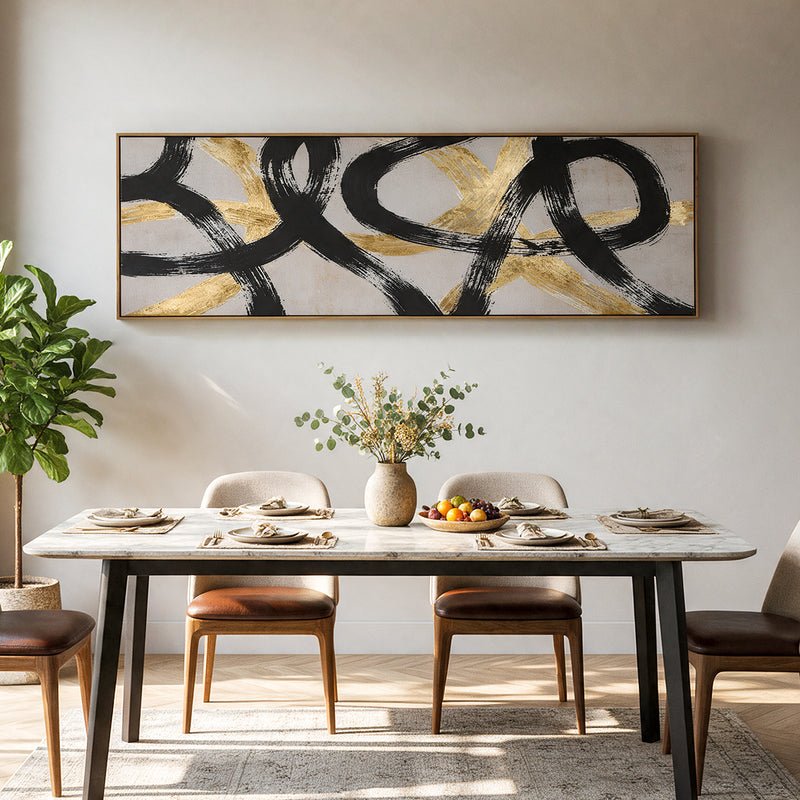 Tribesigns Abstract Wall Art for Living Room, Canvas Art Wall Decor 20"x60" from Tribesigns
If you prefer a more collected look, use a small gallery group with consistent spacing and a shared thread, such as related colors or subjects. Keep the arrangement away from door swings and avoid filling every wall. Negative space helps the focal point read clearly.
Layer light for different moments
One overhead light rarely makes a living room feel right at every hour. Combine general illumination with a lamp near a reading seat or a shaded table lamp on a side table. Check where outlets are and whether the lamp will cast light where you need it; make sure the shade and base fit the table without crowding other useful objects. The Ashley Vien Terracotta Table Lamp pairs a terracotta body and distressed white finish with a fabric shade, and its listing describes a three-way switch. The material and finish can help link a warm-toned room, while a lighter shade can sit comfortably beside wood or neutral upholstery. Think about the room’s existing colors and bulb requirements when selecting any lamp.
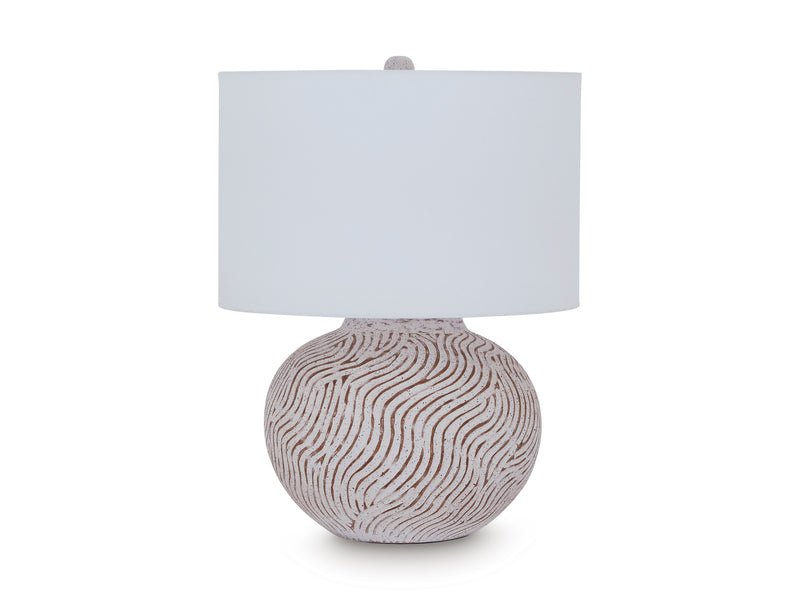 Ashley Vien Terracotta Table Lamp from Levin Furniture
Add softness with a small textile palette
Textiles are a low-commitment way to change the mood of a sofa or chair. Choose pillow covers that relate to the room’s larger colors, then vary texture or shape so the arrangement doesn’t look flat. Start with fewer pillows than you think you need and leave comfortable seating space. The Neo Boucle Lumbar Throw Pillow Cover 2 Pack Set combines a soft boucle texture with a velvet reverse, according to its listing. Use a tactile cover as a quiet contrast against smoother upholstery, and check the listed dimensions against your pillow inserts before planning the arrangement.
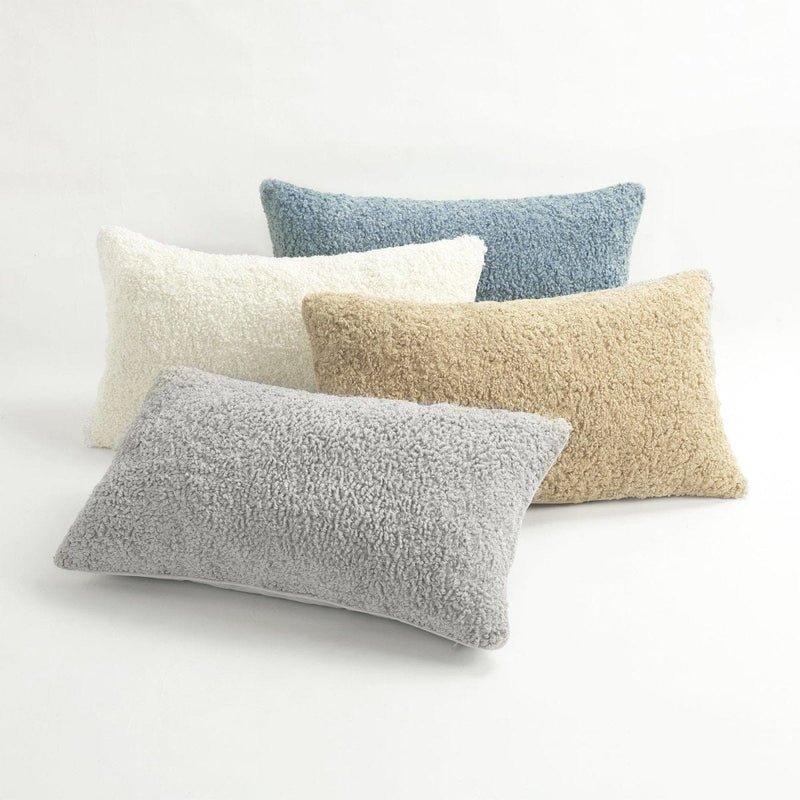 Neo Boucle Lumbar Throw Pillow Cover 2 Pack Set from LushDecor
Window treatments can soften hard edges and add pattern. The French Country Toile Room Darkening Window Curtain Set is described as toile-patterned panels intended for living rooms as well as other spaces. To use a patterned curtain without making the room feel busy, repeat only one or two of its colors elsewhere, perhaps in a cushion or artwork. Measure the window and decide how much light you want to filter before choosing a treatment; keep other large patterns simpler so the room has room to breathe.
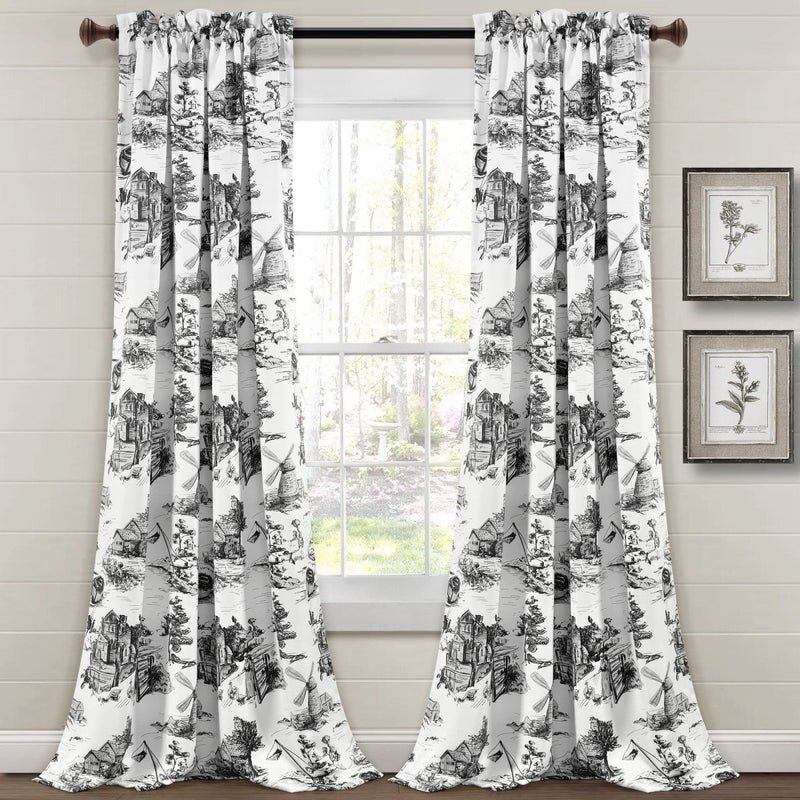 French Country Toile Room Darkening Window Curtain Set from LushDecor
Make storage part of the styling
Visible clutter is often a storage problem, not a decorating problem. Keep daily-use items near where they are needed: a catchall on a console, a basket for throws beside the sofa, or a tray that groups remotes and reading glasses. Leave surfaces partly clear, and vary the height of the few objects you display instead of lining up many small pieces. The Extra-Large Blanket Basket | Decorative Living Room Floor Storage is listed as handwoven rattan reed with a birch base, wooden rim, leather handles, and runner feet. Its natural woven material can bring warmth to a room and give throws a designated home. Check the dimensions against the space beside your sofa so it remains useful without obstructing a route.
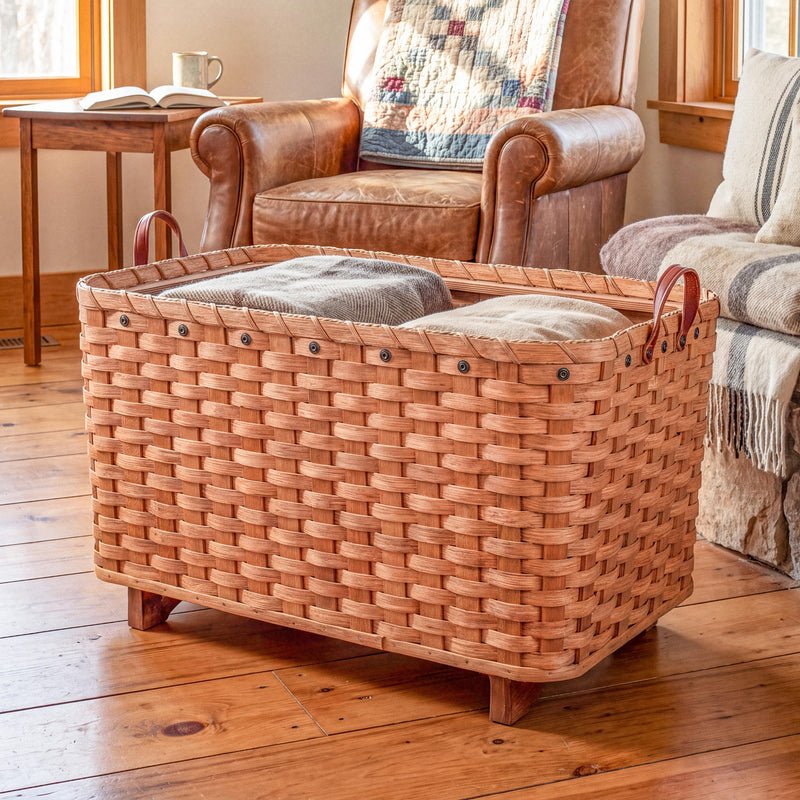 Extra-Large Blanket Basket | Decorative Living Room Floor Storage from Amish Baskets
Use greenery and accents with intention
A vase or plant can add an organic shape to a coffee table, shelf, or mantel. Make it part of a small composition: pair one taller object with a lower stack or bowl, and leave enough surface clear for everyday use. The Peerland Vase is described as a sage-green glazed ceramic vase that can stand alone or hold dried or faux florals. Its muted hue can echo greenery or other soft colors without introducing a loud new pattern. For a simple refresh, try the vase first with branches or flowers you already have, then decide whether the display needs anything else.
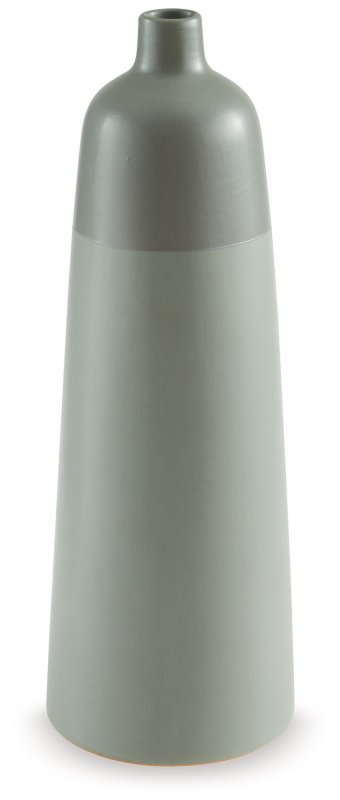 Peerland - Vase from American Furniture Outlet
Pull the room together with a final edit
Step back from the doorway and check three things: can people move easily, does the focal point feel balanced, and are useful items within reach? Remove anything that interrupts a walkway or competes with the room’s main feature. Repeat a material or color in a few places—wood, woven texture, a muted green, or warm metal—rather than matching every object. A coherent room can still include personal finds and contrasting styles; the repeated details are what make them feel at home together.
Work in stages instead of trying to finish everything in one day. First arrange furniture and confirm clearances, then place the largest art or textile, add task lighting, and finish with storage and accents. Live with each change for a little while and adjust based on how the room is actually used. The best living room decor ideas are the ones that look considered and make daily routines easier.